
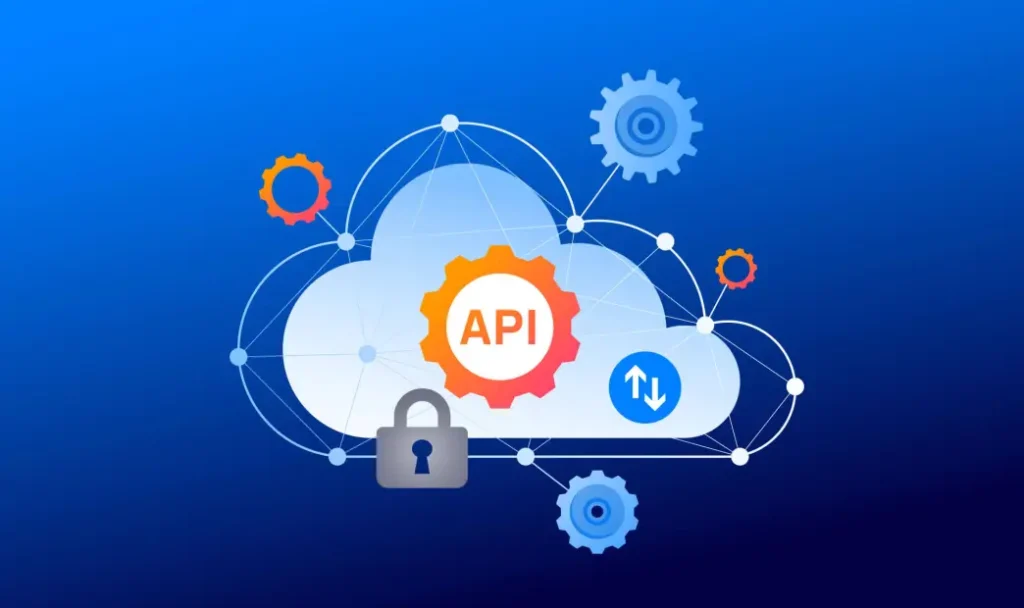
API Security: The Invisible Gateway of Modern Applications—Why APIs Are Now the Primary Target for Hackers
The Heart of the Digital World
The Application Programming Interface (API) is the central nervous system of the modern digital ecosystem. Every time you book a ride on an Uber app, stream a movie on Netflix, or shop on Amazon, an API is at work. APIs are the communication medium that allows different software systems to talk to each other, exchanging data and providing functionality.
Due to the rise of Cloud Computing, mobile apps, and Microservices Architecture, the use of APIs has skyrocketed. However, this immense convenience introduces a significant Cyber Security risk. APIs are often designed and deployed without sufficient security measures, making them an easy and highly effective target for hackers to steal data, compromise systems, or disrupt services.
The goal of this blog post is to detail why API-centric Attacks are escalating, what the fundamental weaknesses of APIs are, and what Advanced Practices in API Security are required to protect your applications and Data Security.
1. Why APIs Are Now the Primary Target for Hackers
Traditionally, hackers targeted the user interfaces of web applications or tried to bypass the Firewall. Now, attacks are shifting directly toward APIs for three main reasons:
A. Inadequate Security by Design:
In many cases, APIs are built with an overwhelming focus on Functionality. Designers often assume that API access is inherently secure or is only intended for internal use. As a result, fundamental security controls like Input Validation, Data Encryption, or proper Access Control are often neglected or entirely missing.
B. Direct Access to Application Logic:
An API is the direct gateway to the Core Application Logic and the Database. Once a hacker exploits an API, they can interact directly with the Backend System, a level of access that was impossible when only targeting the user interface.
C. The Security Blind Spot:
Traditional Web Application Firewalls (WAFs) and older security tools are not effective at detecting flaws in application logic and authorization. While WAFs can block known attacks like SQL Injection or XSS, an attack exploiting weak Business Logic or an authorization flaw in an API often appears to the WAF as legitimate traffic.
2. The Most Critical API Weaknesses: The OWASP API Security Top 10
The OWASP (Open Web Application Security Project), a leading organization focused on API vulnerabilities, has compiled a list of the most frequent and dangerous API attacks:
A. Broken Object Level Authorization (BOLA):
This is arguably the most critical API vulnerability, where the server fails to properly verify that the user making the request has the right to access the specific data object requested.
- Risk: A user (User ‘A’) sends an API request to access their own account data. If the API doesn’t correctly verify authorization, the hacker can simply change the User ID in the request and access the data of millions of other users (User ‘B’, ‘C’, etc.)—a classic large-scale Data Breach vector.
B. Broken Function Level Authorization (BFLA):
This vulnerability involves flaws in the system’s role-based access control.
- Risk: A regular user account, which should only have permission to view data, might be able to access administrator functions (like deleting users or changing configuration settings) via the API because the permission checks for those specific API endpoints were flawed or missing.
C. Excessive Data Exposure:
Often, APIs are designed to return more data than the client (the mobile app) actually needs.
- Risk: For instance, the mobile app may only need the user’s name and phone number, but the API sends the entire database row, including sensitive information like home address and date of birth. While the client app hides the unnecessary data, the sensitive data is exposed to an attacker during transmission.
D. Lack of Rate Limiting and Resource Management:
If the number of API requests is not strictly limited, hackers can use automated Bots to rapidly send high volumes of traffic. This can lead to system overload, causing a DDoS (Distributed Denial of Service) Attack, or facilitate Brute-Force Attacks to guess valid IDs or credentials.
3. Advanced Strategies and Practices for API Security
To secure APIs against modern attacks, organizations must move beyond just firewalls and embed security directly into the application design process.
1. Enforce the Zero Trust Principle:
- Strict Verification: Every single API call, whether internal or external, must strictly verify the Identity and Access privileges before processing the request. Zero Trust must be the foundational policy for all API Security.
2. Mitigating BOLA and BFLA with OLA:
- Object Level Authorization (OLA): Implement a mandatory security check at the Backend Server level for every API request to confirm that the user is authorized to access the specific resource (object) they are requesting. This check must be enforced on every function.
- Input Validation: Rigorously validate all input parameters for unwanted or malicious characters or code to prevent injection attacks.
3. Data Trimming and Encryption:
- Data Minimization: Design the API to follow the Principle of Least Privilege for data output—it should only return the data that the client strictly requires. Data Trimming mitigates the risk of Excessive Data Exposure.
- Transit Encryption: All API traffic must be Encrypted using mandatory SSL/TLS (HTTPS) protocols.
4. API Gateway and Strict Rate Limiting:
- API Gateway: Utilize a specialized API Gateway as the single entry point for all API traffic. The Gateway should handle traffic management, authentication delegation, and core security policies.
- Quota Management: Strictly Limit the number of API requests allowed per user or IP address within a specific timeframe. This is essential to prevent DDoS and Brute-Force attacks.
5. Continuous Monitoring and Threat Detection:
- Runtime Monitoring: Use dedicated API Security Platforms to monitor API traffic in real-time, detecting unusual behavior (Anomaly Detection) or malicious payloads that traditional WAFs miss.
- Threat Intelligence: Utilize Threat Intelligence feeds and specialized tools to detect automated scanning or Bot Traffic targeting your APIs.
6. Robust Authentication and Token Management:
- Modern Protocols: Use modern authentication protocols such as OAuth 2.0 and OIDC (OpenID Connect) for user and application authentication.
- Token Protection: Ensure the Tokens used for API access have short Expiration Times and are stored securely in protected HTTP Headers or secure cookies, never exposed in URLs.
Conclusion: Securing the API is Securing the Business
API Security is no longer just a technical detail; it is a critical business imperative. As data flows through billions of API calls, a single API vulnerability can be catastrophic for the entire business.
Vulnerabilities like BOLA and Excessive Data Exposure clearly demonstrate that relying on traditional WAFs is no longer sufficient. Organizations must adopt Zero Trust principles, implement powerful API Gateways, and ensure Security Agility right from the application design stage.
Securing your APIs is synonymous with protecting customer trust, your data assets, and the future of your business. Treat every API not as an entity to be trusted, but as a potential Risk that must be continuously verified.