
Ransomware-as-a-Service (RaaS) and Double Extortion—The Cybercrime Business Model and Essential Defense Strategies
Cybercrime is Now a ‘Service’
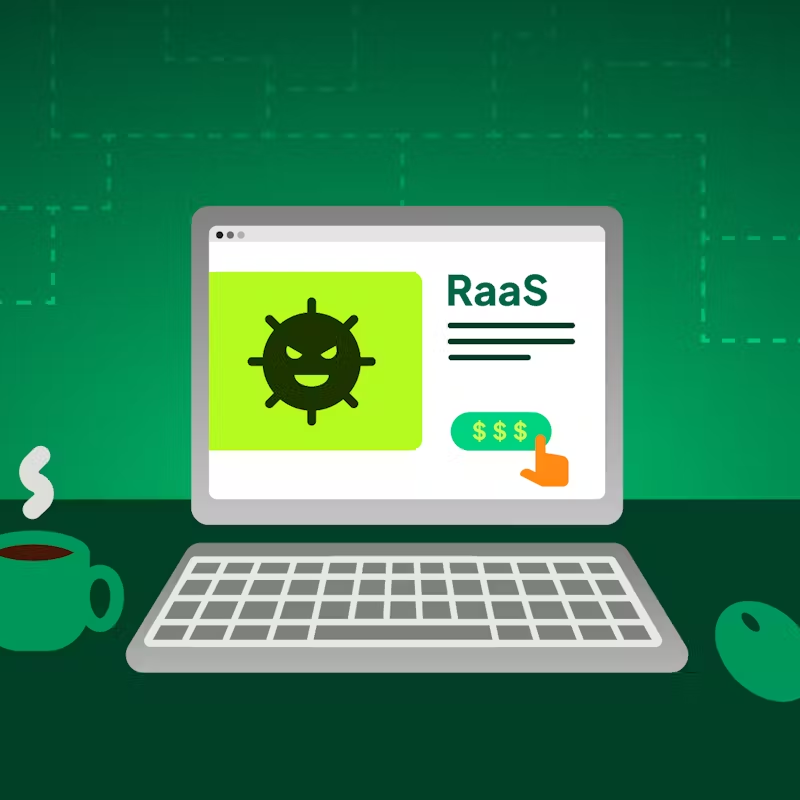
st a decade ago, ransomware was largely the domain of isolated, unorganized hackers. Today, the rise of the Ransomware-as-a-Service (RaaS) model has transformed cybercrime into a highly organized, efficient, and extremely lucrative industry. RaaS is a subscription-based model where experienced hacking groups sell the malware, infrastructure, and technical support to other criminals, known as Affiliates.
The impact of this model has been amplified by the Double Extortion tactic. Previously, ransomware only encrypted data. Now, hackers first steal the data. If the ransom is not paid, they threaten to publish the stolen, sensitive data online. This dual pressure (Encryption + Data Leak) often forces organizations to pay the ransom.
The primary goal of this blog post is to detail how the RaaS model operates, how Double Extortion escalates the stakes of an attack, and what rigorous Defense and Recovery Strategies your organization must adopt to survive this lethal, organized threat.
1. Ransomware-as-a-Service (RaaS): The Modern Business Model of Cybercrime
RaaS can be likened to the legitimate Software-as-a-Service (SaaS) model. It has dramatically lowered the skill gap in the cybercrime ecosystem.
Key Components of the RaaS Model:
- Operators/Developers: These are the sophisticated hacking groups who create the core ransomware code, continuously update the malware, and manage the C2 (Command and Control) infrastructure. (e.g., LockBit, Ryuk, Conti, REvil).
- Affiliates: These are the criminals who may not possess high-level hacking skills. They purchase or subscribe to the ready-made malware and tools from the RaaS operator. The affiliate’s main job is simply to gain initial access to a target system and deploy the malware.
- Profit Sharing: The RaaS model operates on a revenue-sharing basis. Typically, the operators take a cut of 20% to 30% of the ransom payment, leaving the affiliate with a significant 70% to 80%.
Main Advantages of RaaS (for Criminals):
- Low Barrier to Entry: Low-skilled hackers can now use the world’s most sophisticated ransomware strains.
- Expert Support: Operators often provide affiliates with technical support, guidance on target selection, and even negotiation strategies for dealing with victims.
- Massive Scalability: A single operator group can leverage hundreds of affiliates simultaneously to attack thousands of targets worldwide, achieving global reach.
2. Double Extortion: Dual Pressure, Near-Inevitable Payment
First employed by the Maze ransomware group in 2019, the Double Extortion tactic has become the dominant strategy for modern ransomware attacks.
How Double Extortion Works:
- First Extortion: Encryption: The affiliate gains access and encrypts all critical data within the target organization’s systems, blocking access to operations.
- Second Extortion: Data Leak: Before encryption, the hackers steal all sensitive data and transfer it to their own servers (Exfiltration).
- Pressure Application: When demanding the ransom, the hackers threaten not only to withhold the decryption key but also to publish all the stolen, sensitive data on their public data leak sites (often hosted on the Dark Web).
Why is it So Effective?
- Irrelevance of Backups: Even if an organization has flawless, up-to-date backups (allowing them to recover from the first extortion—encryption), they cannot eliminate the threat of the second extortion (data leak).
- Regulatory Compliance Pressure: If the stolen data falls under regulations like GDPR, HIPAA, or CCPA, the public data leak exposes the company to massive fines and crippling legal action, dramatically increasing the pressure to pay.
- Reputational Damage: The exposure of sensitive customer and partner data causes irreparable damage to an organization’s reputation and customer trust. The fear of this damage drives many companies to pay the ransom.
3. Robust Defense Strategies Against RaaS and Double Extortion
To counter this organized threat, security strategies must be upgraded. A basic firewall or antivirus is insufficient.
1. Immutable Backups and the 3-2-1 Rule
- Defense: The only sure way to recover quickly without paying the ransom is to have reliable backups.
- The 3-2-1 Rule: Maintain three copies of your data, store them on two different types of media, and ensure at least one copy is either offline or in Immutable storage. Immutable Backup means the data, once stored, cannot be changed, modified, or deleted by anyone—not even ransomware.
- Regular Testing: Ensure your backups are regularly tested by performing actual recovery drills.
2. Identity and Access Management (IAM)
- MFA Enforcement: Enforce Multi-Factor Authentication (MFA) for every account that has access to the network, especially for administrator and privileged accounts. Stolen credentials via phishing are the primary access vector for RaaS affiliates; MFA blocks this path.
- Principle of Least Privilege: Grant every user and system only the minimum access required to perform their specific task. This severely limits a hacker’s ability to spread within the system (Lateral Movement).
3. Endpoint Detection and Response (EDR) and Threat Hunting
- Use EDR/XDR: Replace traditional signature-based antivirus with EDR (Endpoint Detection and Response) or XDR solutions. These tools do not just block known malware; they monitor for anomalous activities (like mass file encryption or unusual file access patterns) in real time.
- Proactive Monitoring: Train your Security Operations Center (SOC) team on Threat Hunting to proactively look for signs of early intrusion (Initial Access) or data exfiltration attempts before the actual ransomware payload is deployed.
4. Network Segmentation and Micro-Segmentation
- Isolation: Divide your network into small, isolated segments (Segmentation). If an affiliate breaches one segment, they are prevented from quickly spreading to other segments containing critical data or servers.
- Cloud Caution: Apply Micro-Segmentation within your cloud environment to ensure that a compromised cloud function or container does not put the entire cloud infrastructure at risk.
5. Data Exfiltration Detection (DLP)
- Countering Double Extortion: Deploy Data Loss Prevention (DLP) tools to detect and block data theft (Exfiltration). These tools monitor and flag any unusual or large-scale attempted transfers of sensitive data outside the network perimeter.
4. Incident Response: What to Do After an Attack
If an attack is successful, a swift and organized response is crucial.
- Communication and Isolation: Immediately Isolate all infected systems from the network. Promptly notify law enforcement and your cyber insurance provider (if applicable).
- Data Leak Proof: During negotiations (which should be handled by experts), demand proof and samples of the data the hackers claim to have stolen.
- Ransom Debate: Security experts advise against paying the ransom, as it funds and encourages future RaaS groups. However, the decision is often complex, based on the risk of public data leakage and legal obligations.
Conclusion: Preparation, Prevention, and Recovery
Ransomware-as-a-Service (RaaS) and Double Extortion demonstrate that cyber criminals are relentlessly perfecting their business model. This threat no longer just encrypts data; it targets our privacy, reputation, and financial stability.
In this new era, your security posture must not only be capable of preventing attacks but also robust enough to ensure rapid and effective recovery in the event of a breach. Immutable Backups, strict IAM policies, and continuous EDR monitoring are the three pillars of your defense against the RaaS threat.
Is your organization prepared to face today’s highly organized cyber criminals?