
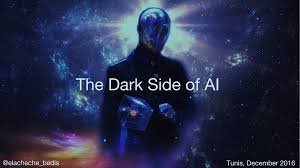

The Dark Side of AI: Generative AI (GenAI)-Powered Cyber Attacks—The New Era of Deception via Deepfakes and Automated Phishing
The New Age of Intelligent Attacks
Over the past few years, Generative AI (GenAI) technology has brought a revolution across nearly every sector of human life. Unfortunately, this same technology has now fallen into the hands of Cyber Criminals. Powerful Large Language Models (LLMs) like ChatGPT, Google Gemini, and open-source models are now highly effective tools for hackers, lending unprecedented speed and credibility to traditional attack methods.
Among the most dangerous capabilities powered by GenAI are Automated Phishing, Deepfakes, and the ability to generate highly customized malware. These attacks specifically target human trust and emotion, making even cyber-aware employees and traditional security systems highly susceptible to deception.
The primary goal of this comprehensive blog post is to detail how Generative AI is transforming the cybercrime landscape, what these new classes of threats entail, and what Advanced Defense Strategies are essential for protecting your personal and organizational data against this rapidly evolving risk.
1. How Generative AI Empowers Cybercrime
The power of Generative AI grants hackers three crucial advantages: speed, Scalability, and enhanced Credibility.
A. Automated Phishing via LLMs: The End of Grammar Errors
In the past, crafting an effective phishing email required decent language skills, perfect grammar, correct spelling, and cultural context. Now, with LLMs:
- Massive Scaling: Hackers can instantly generate highly personalized emails, text messages, or chat messages for hundreds or thousands of targets simultaneously—in a fraction of a second.
- Elimination of Errors: Emails generated by LLMs are generally free of spelling or grammatical errors. This lack of common red flags allows them to easily pass as legitimate emergency messages from an office or trusted contact.
- Ease of Spear Phishing: With minimal information about a target (such as their LinkedIn profile), GenAI can create emails that perfectly mimic the tone, style, and context of their boss or a senior colleague. This makes sophisticated Spear Phishing accessible to low-skilled criminals.
B. Deepfakes and Identity Impersonation: The Voice of Authority
Deepfake technology refers to synthetic images, videos, or audio created via Generative AI that realistically mimic a person’s appearance, voice, or behavior.
- Voice Cloning: Hackers can use small audio clips of an executive (easily found online) to clone their voice using GenAI. This cloned voice is then used in a Vishing (Voice Phishing) attack to call a financial officer or a high-ranking employee, demanding an urgent, unauthorized wire transfer.
- Video Deepfakes: In more advanced scenarios, hackers may use deepfake video during a video conference or an online meeting to impersonate a senior official, gaining access to sensitive information or security credentials. Multi-million dollar financial frauds have already been reported due to these voice and video deepfakes.
C. Malware Development and Polymorphism
While major LLM providers impose restrictions on generating malicious code, hackers use techniques like “Jailbreaking” to bypass these safeguards, rapidly accelerating malware development.
- Automated Coding: GenAI helps hackers write complex code for Ransomware or Infostealer Malware without requiring advanced programming skills.
- Polymorphic Malware: GenAI can be used to generate code that constantly changes its own signature and structure, making it Polymorphic. This allows the malware to easily evade detection by traditional Antivirus and signature-based Security Software.
2. New Cyber Threat Vectors Created by Generative AI
Beyond enhancing existing attack methods, GenAI is creating entirely new security challenges:
A. Prompt Injection Attacks: Targeting the Model Itself
This is a novel form of attack that targets the LLM Model directly.
- How it Works: The attacker provides specially crafted input (Prompt) that manipulates the model into ignoring its internal security instructions (Safety Guidelines). For example, forcing a public-facing chatbot to leak internal data or navigate to a malicious website.
- Consequence: This attack can compromise public-facing AI chatbots or applications powered by LLMs, leading to user data exposure or the dissemination of harmful content.
B. Data Poisoning and Model Integrity
In the future, a key attack vector will be compromising the Training Data used for LLMs.
- Data Poisoning: If malicious or incorrect data is injected into a model’s training set, the model itself will begin to produce incorrect or harmful outputs. For instance, an AI-powered security detection tool trained on poisoned data might deliberately ignore a genuine attack.
- Model Inversion: Hackers might also attempt to reverse-engineer an AI model to extract the sensitive data it was trained on.
C. Synthetic Identity Theft
GenAI can be used to generate highly realistic, entirely fabricated digital identities that are capable of bypassing automated KYC (Know Your Customer) and other identity verification processes, making financial fraud and money laundering easier to perform.
3. Advanced Defense Strategies Against GenAI Threats
Faced with this fast-evolving landscape, upgrading our security posture is mandatory:
1. Zero Trust and Multi-Factor Authentication (MFA) as a Baseline
- Defense: Even if a hacker successfully steals credentials via a deepfake or phishing attempt, the application of Multi-Factor Authentication (MFA) should prevent account access. Moving to Passwordless Authentication methods is even more effective.
- Zero Trust: Implement a Zero Trust Architecture (ZTA) that mandates the verification of every access request, severely limiting the ability of an attacker (even one with compromised credentials) to spread through the network (Lateral Movement).
2. AI-Powered Detection Tools (EDR and Behavioral Analytics)
- Fighting Fire with Fire: AI must be used against AI. Deploy Endpoint Detection and Response (EDR) or Extended Detection and Response (XDR) tools that use Behavioral Analytics to monitor the normal activity of users.
- Anomaly Detection: If an email or voice call leads to financial activity that deviates from the user’s typical behavior (e.g., an unusually large or fast transaction request), these tools can flag the activity as suspicious, potentially mitigating deepfake fraud.
3. Continuous Cyber Awareness Training and Verification Protocol
- New Tactics: Provide mandatory, continuous training to employees on new threats like deepfake videos and AI-powered voice phishing (Vishing). Employees must be trained to verify highly sensitive or urgent requests.
- Verification Protocol: Executives must establish a strict Out-of-Band verification protocol for financial requests. This means that instead of approving a transaction via a voice call, the employee must be required to verify the request through a predetermined secondary channel (e.g., a secured internal messaging app or a different phone number).
4. LLM and API Security Hardening
- Input Sanitization: For any internal or external application that uses an LLM, rigorously Sanitize and validate all user inputs to prevent Prompt Injection attacks.
- Model Monitoring: Use specialized API Security tools to monitor the outputs of your LLM models for any signs of data leakage or the generation of harmful code. Implement Rate Limiting to prevent brute-force attacks against the API endpoints.
Conclusion: Human Judgment is the Final Defense
The rise of Generative AI (GenAI) presents one of the greatest challenges ever faced by cybersecurity professionals. Cyber criminals can now execute attacks with less effort and far greater credibility. While technical solutions—such as EDR, CNAPP, and Zero Trust—are crucial, they are not the only answer.
In the age of GenAI, your most vital defense remains Human Judgment. Train your employees to question every unexpected or urgent request. Learning to look beyond the perceived identity of the sender and verifying the underlying intent—this is the ultimate protection against the sophisticated deception of GenAI-powered attacks.
Prepare for the future—because hacking is no longer an art, it’s rapidly becoming a science.